90s Blowout Hairstyles: 12 Big, Bouncy Looks to Try in 2026
Khadija Sharif·
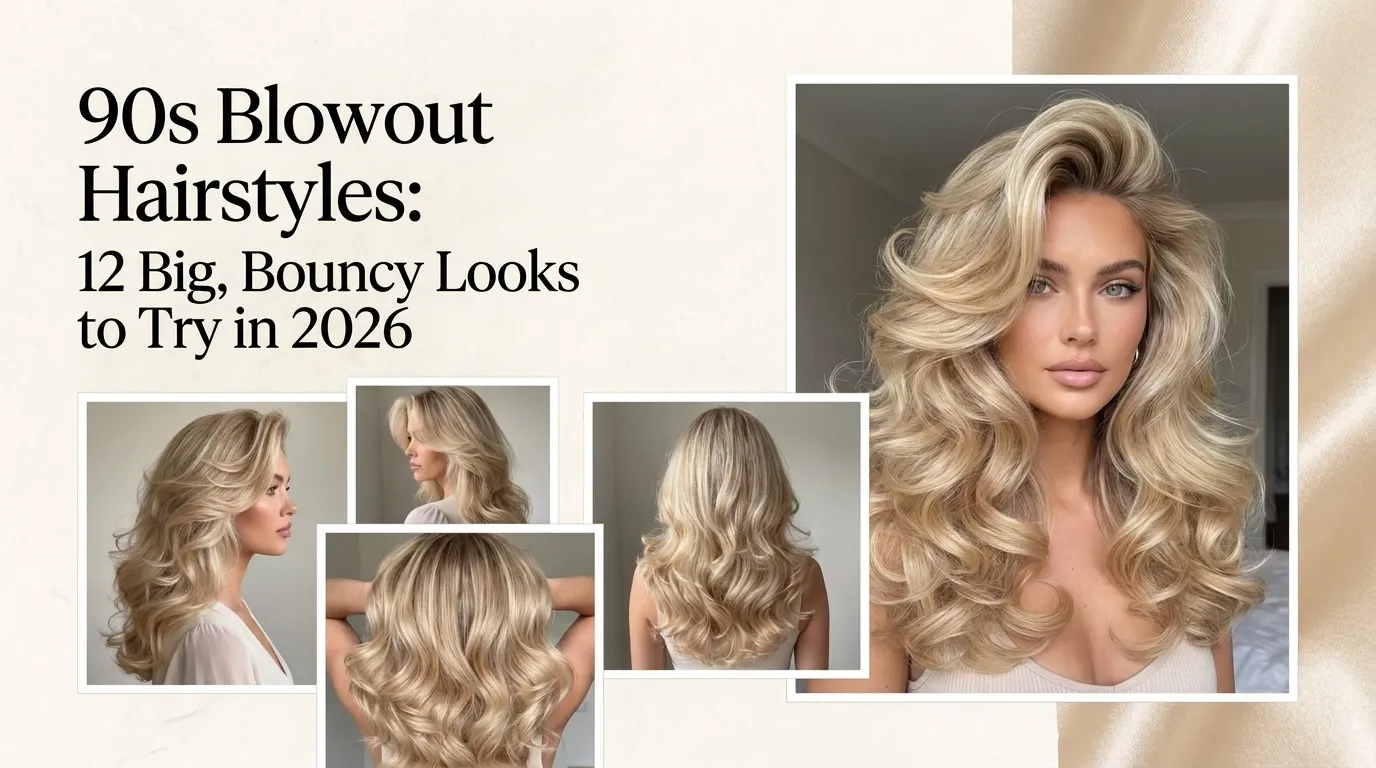
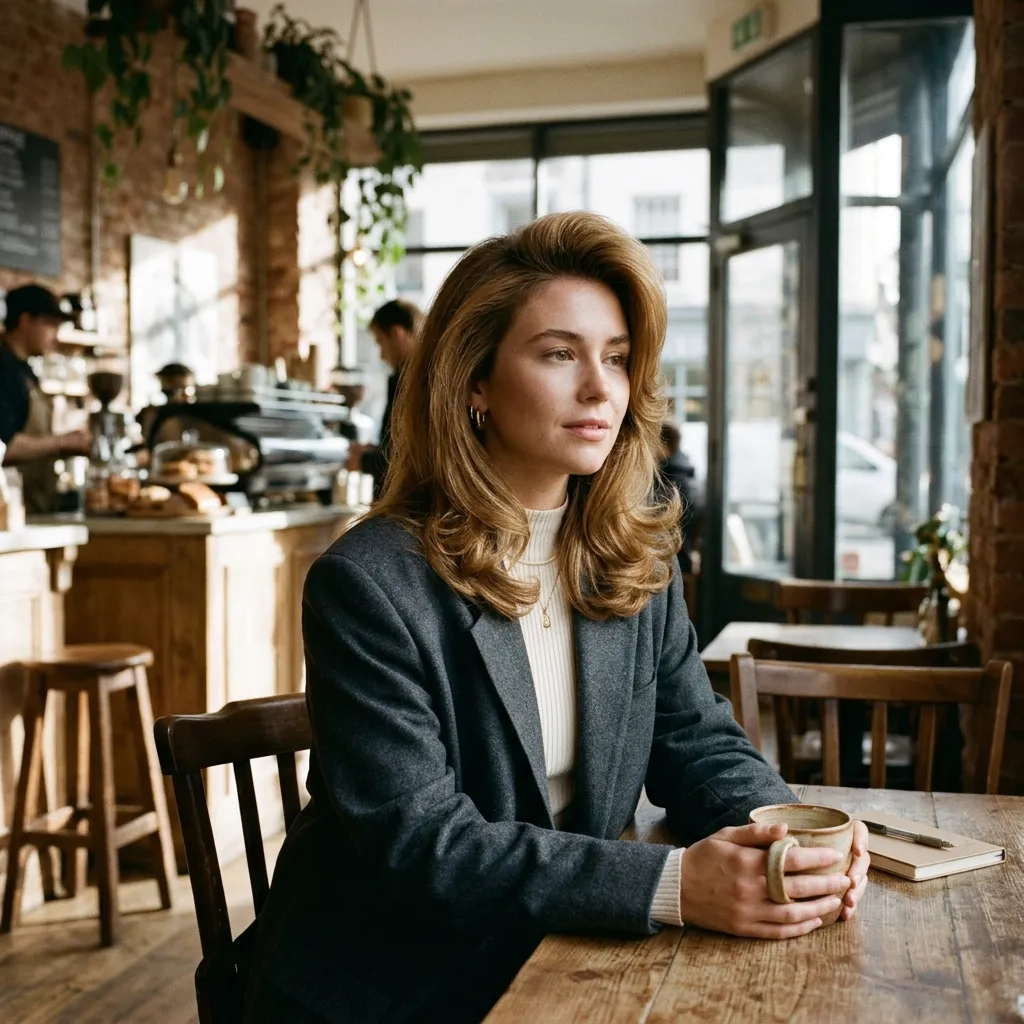
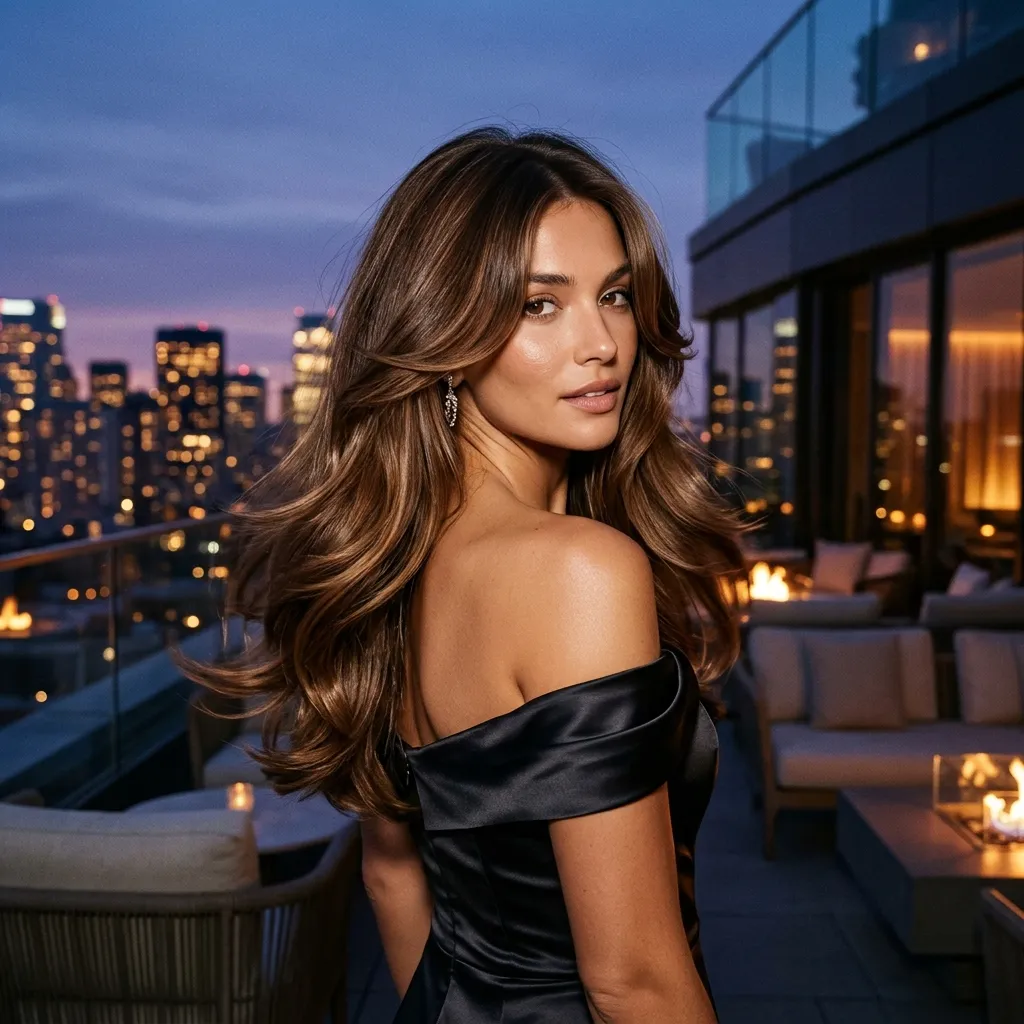
The 90s blowout is back because it delivers something many modern hairstyles cannot: noticeable volume with a soft, polished finish. Instead of looking heavily styled, the hair appears full, smooth, touchable, and naturally bouncy. The look is built around movement, rounded ends, lifted roots, and layers that catch the light as you move.
A classic 90s blowout can work on medium or long hair, and the technique can be adjusted for straight, wavy, or layered hair. You can keep the shape sleek and glamorous or make it slightly undone for a more relaxed finish. Curtain bangs, face-framing layers, feathered ends, and rounded brushes all pair naturally with this style.
The best part is that you do not need one exact haircut to create a 90s-inspired blowout. The right combination of volume, direction, smoothness, and movement can give many different haircuts that unmistakable retro finish. These 12 ideas show how to wear the look in ways that feel current rather than like a costume from another decade.
1. Classic 90s Blowout With Full Volume
The classic 90s blowout starts with rounded volume through the roots, full lengths, and ends that curve away from the face. It is the most recognizable version of this hairstyle because the shape looks polished from every angle. The crown has enough lift to prevent the hair from sitting flat, while the lower sections retain soft movement. A glossy finish helps the entire style look healthy and expensive.
The ends should not form tight curls. Instead, they should roll gently around a large round brush and fall into a loose bend. This creates the smooth bounce associated with traditional 90s blowout hair. For extra body, work with medium-sized sections rather than trying to dry the entire length at once. Let each section cool in its rounded shape before brushing through it.
This style suits long hair especially well, but medium-length hair can achieve the same effect with slightly larger volume near the crown. A center part gives it a clean modern feel, while a soft side part creates a more dramatic retro finish. The result works for dinners, events, photos, or simply adding glamour to an everyday hairstyle.
2. 90s Blowout With Curtain Bangs
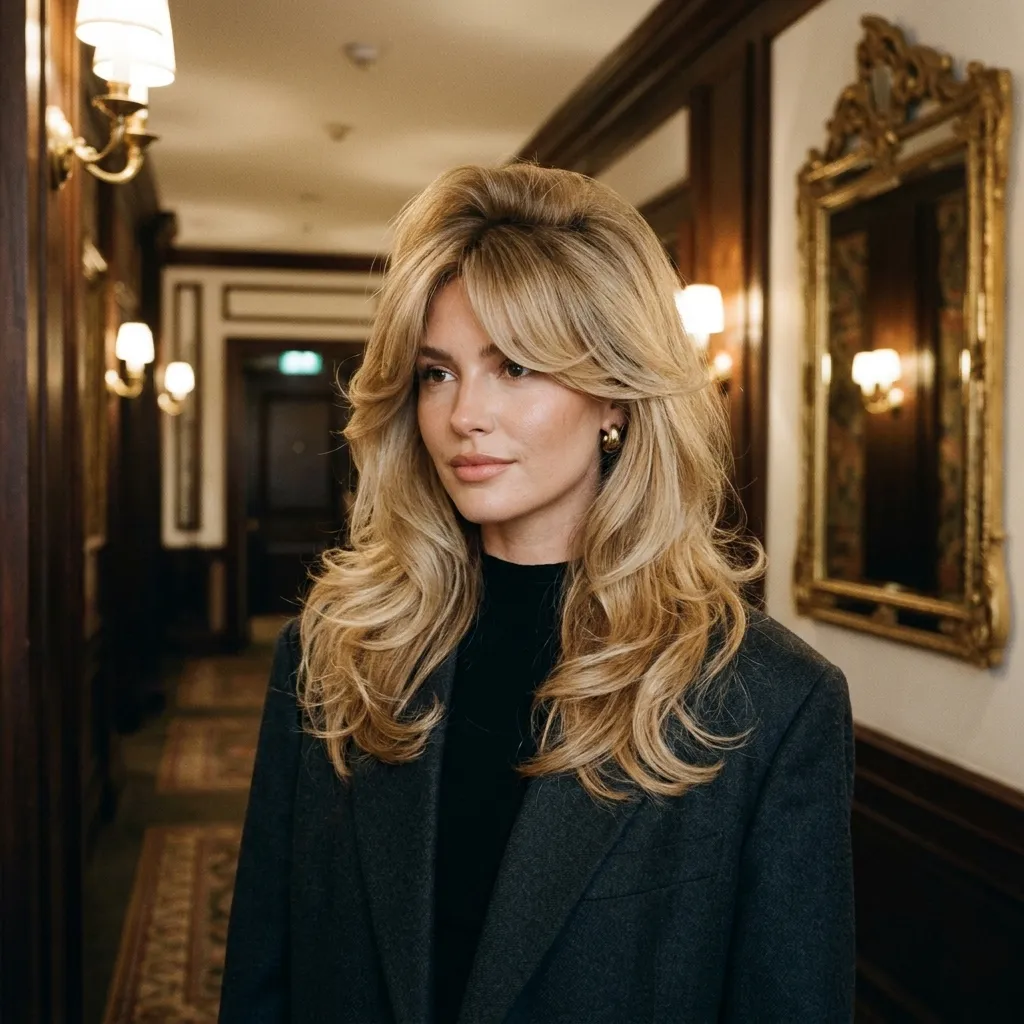
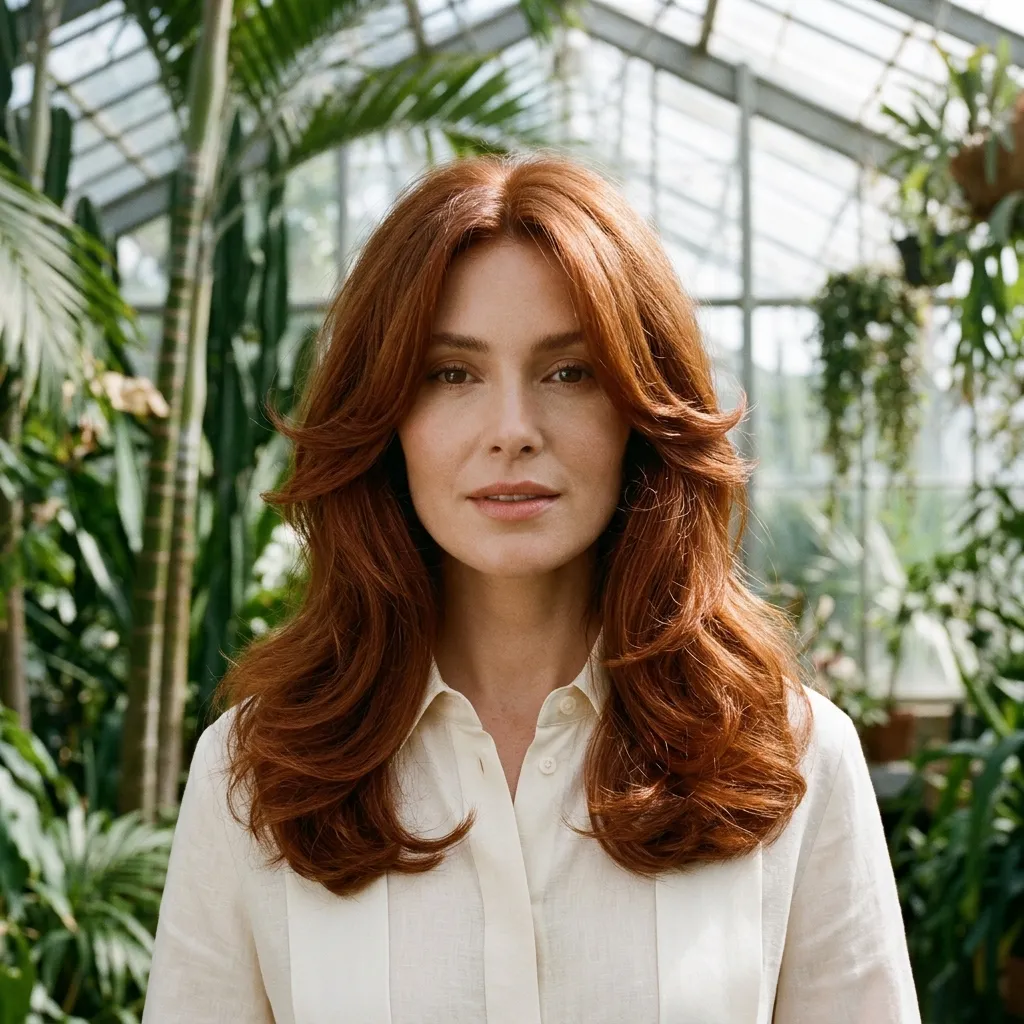
A 90s blowout with curtain bangs creates extra movement around the face while keeping the rest of the hair full and polished. The bangs should split softly around the center and curve outward rather than sitting flat against the forehead. Their shape blends into the layers beside the cheeks. This makes the hairstyle feel connected rather than like separate bangs placed on top of a blowout.
The easiest way to create the shape is to direct each side of the bangs away from the face while drying them with a round brush. The brush should roll backward toward the crown instead of pulling the hair straight down. Once the hair cools, gently separate the sections with your fingers. Avoid brushing the bangs too much because excessive brushing can remove the lift.
Long curtain bangs work particularly well with this version because they can merge into cheekbone and jaw length layers. The combination creates a flowing frame that moves whenever the head turns. It is also a useful option if you want a softer alternative to a very dramatic full fringe.
3. Big 90s Blowout With a Deep Side Part
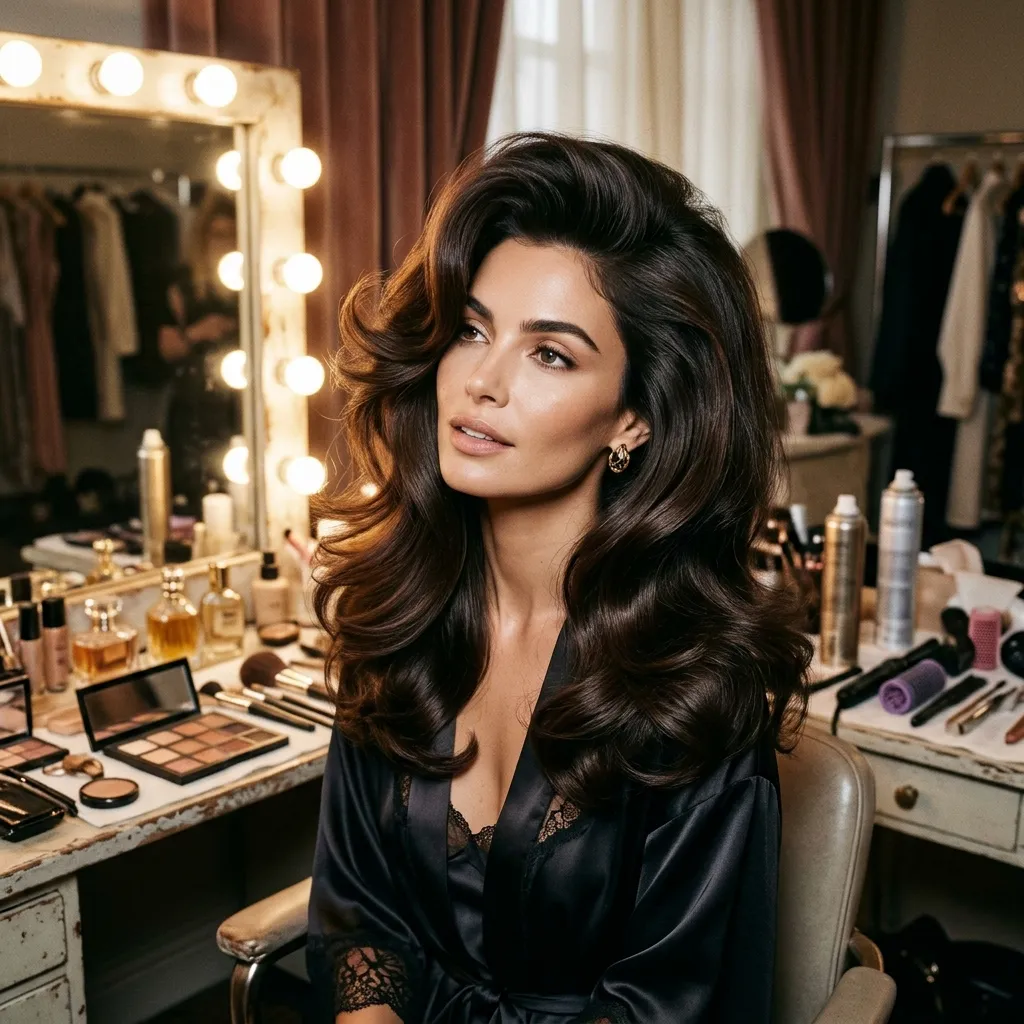
A deep side part gives a 90s blowout more height and a stronger glamorous shape. Moving the part away from the center allows one side of the hair to rise naturally, creating dramatic volume across the top. The opposite side can remain smooth and slightly closer to the head for contrast. This asymmetry makes the hairstyle look fuller without requiring extreme teasing.
The side part should be established before blow-drying so the roots learn to sit in the correct direction. Lift the hair upward and slightly across the head while using a round brush. Large rollers can also help maintain the shape while the hair cools. After removing them, use your fingers to separate the volume instead of flattening it with a dense brush.
This version is especially effective for evening occasions because the deep part gives the hairstyle a polished, old-school glamour. It also works beautifully with long layers because the movement becomes more noticeable when the hair is swept toward one side. A small amount of lightweight shine serum on the ends can finish the look without making the roots greasy.
4. Soft Feathered 90s Blowout
A soft feathered blowout focuses on layered ends that sweep outward and backward. The result has less density than a huge traditional blowout but still carries plenty of movement. Feathered layers are particularly useful when you want the hairstyle to look light and airy. They give long hair a flowing shape instead of leaving the ends looking heavy.
To create this effect, dry the layers with a medium or large round brush and turn the ends away from the face. Different sections can be directed at slightly different angles to prevent the hair from looking too uniform. The top should remain smooth while the mid lengths gain volume. Once everything is dry, lightly shake the layers apart with your hands.
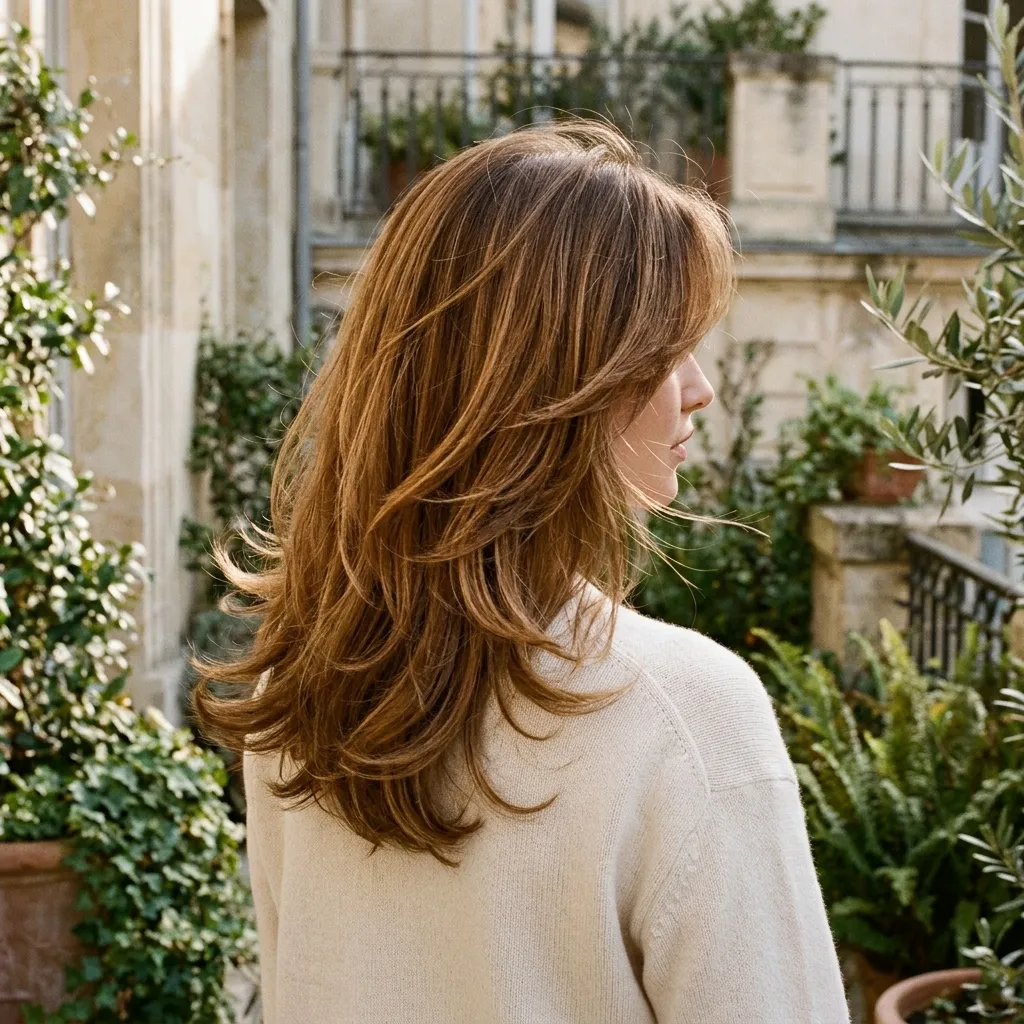
This hairstyle pairs well with highlights because the lighter pieces become more visible as the layers move. It also looks attractive with a soft side part or loose middle part. Unlike an extremely structured blowout, the feathered version can be worn during the day without feeling overdressed.
5. 90s Blowout for Long Layered Hair
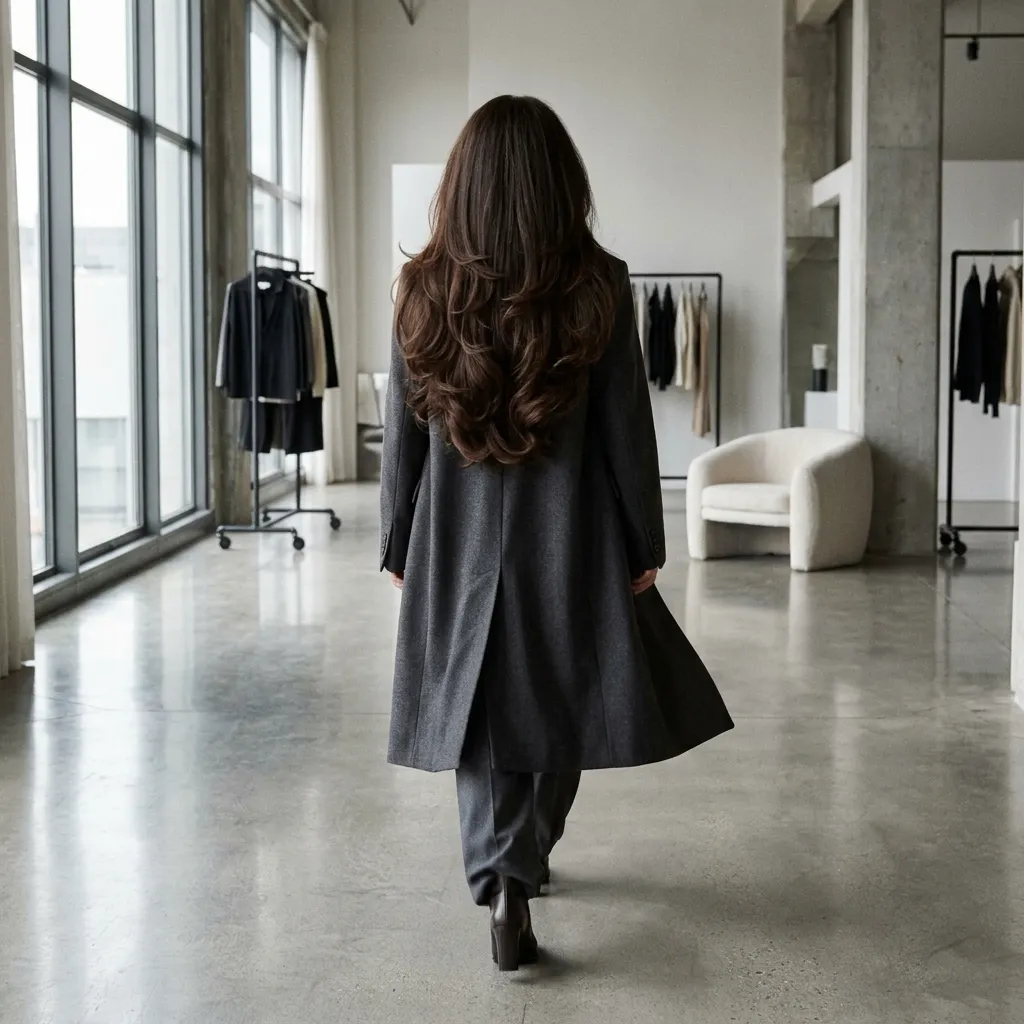
Long layered hair provides an ideal base for a 90s blowout because every layer can contribute to the overall movement. The longest pieces create length, while shorter layers around the face and crown create lift. The goal is not to curl every section separately. Instead, the layers should flow into one another and form a continuous shape.
Start with the shorter sections because they need enough volume to support the rest of the hairstyle. Use a large round brush to create lift at the roots and a smooth bend through the mid-lengths. Move toward the longer sections afterward, keeping the ends curved rather than tightly rolled. Cooling time is important because long hair can lose volume quickly when it is still warm.
A long layered 90s blowout can look especially striking with subtle highlights or lowlights. The different tones become more visible as the layers move. If your hair is very long and heavy, lightweight volumizing products can help prevent the style from becoming flat within a few hours.
6. 90s Blowout With Flipped Ends
Flipped ends bring a playful 90s character to an otherwise smooth blowout. The ends curve outward instead of rolling inward, giving the hair a lighter and more animated shape. The flip can be subtle for an everyday hairstyle or more pronounced for a stronger retro effect. Keeping the roots smooth helps prevent the style from becoming too theatrical.
The direction of the brush matters most when creating this look. As you reach the final few inches of each section, rotate the brush outward and slightly away from the head. Hold the shape for a few seconds while the hair cools. A flexible hairspray can help preserve the movement without making the ends stiff.
This version looks particularly good on medium-length hair because the flipped ends remain visible instead of disappearing into very long layers. It can also add personality to a simple haircut without requiring bangs or extensive layering. Pairing it with a glossy finish gives the hairstyle a more polished 90s beauty campaign feel.
7. 90s Blowout With Face Framing Layers
Face framing layers make a 90s blowout feel softer because the shortest pieces guide attention toward the eyes, cheekbones, and jaw. These sections should blend gradually into the rest of the haircut rather than creating obvious steps. The front layers can be curved away from the face to create an open, lifted effect. This gives the hairstyle movement without requiring a dramatic fringe.
A large round brush is useful for shaping the face framing pieces because it creates a smooth curve rather than a sharp bend. Direct the hair backward while drying and allow it to cool before releasing it. The remaining lengths can receive a softer bend so the front remains the main feature. A small amount of lightweight smoothing cream can help control flyaways.
This variation is suitable for people who want the classic 90s blowout effect but do not want excessive overall volume. It also works with medium length cuts where face framing layers are more visible. The finished hairstyle feels polished while retaining enough softness for everyday wear.
8. Voluminous 90s Blowout for Medium Length Hair
Medium length hair can produce a strong 90s blowout when the volume is concentrated at the roots and crown. Since there is less length to weigh the hair down, the finished shape can look surprisingly full. The ends should have a rounded bend that follows the haircut. Keeping the silhouette balanced prevents the style from looking overly wide.
Use a large round brush to lift the roots upward before smoothing each section. The ends can be rolled under slightly or directed away from the face depending on the desired mood. Avoid using very small sections because that can create too much curl. Larger sections produce the broad, flowing shape that defines a blowout.
This version is practical for shoulder length and collarbone length hair. It gives shorter hair the glamour associated with long 90s hairstyles without requiring extensions. A soft middle part keeps it current, while a side part adds more volume and retro drama.
9. Glossy 90s Blowout With Sleek Roots
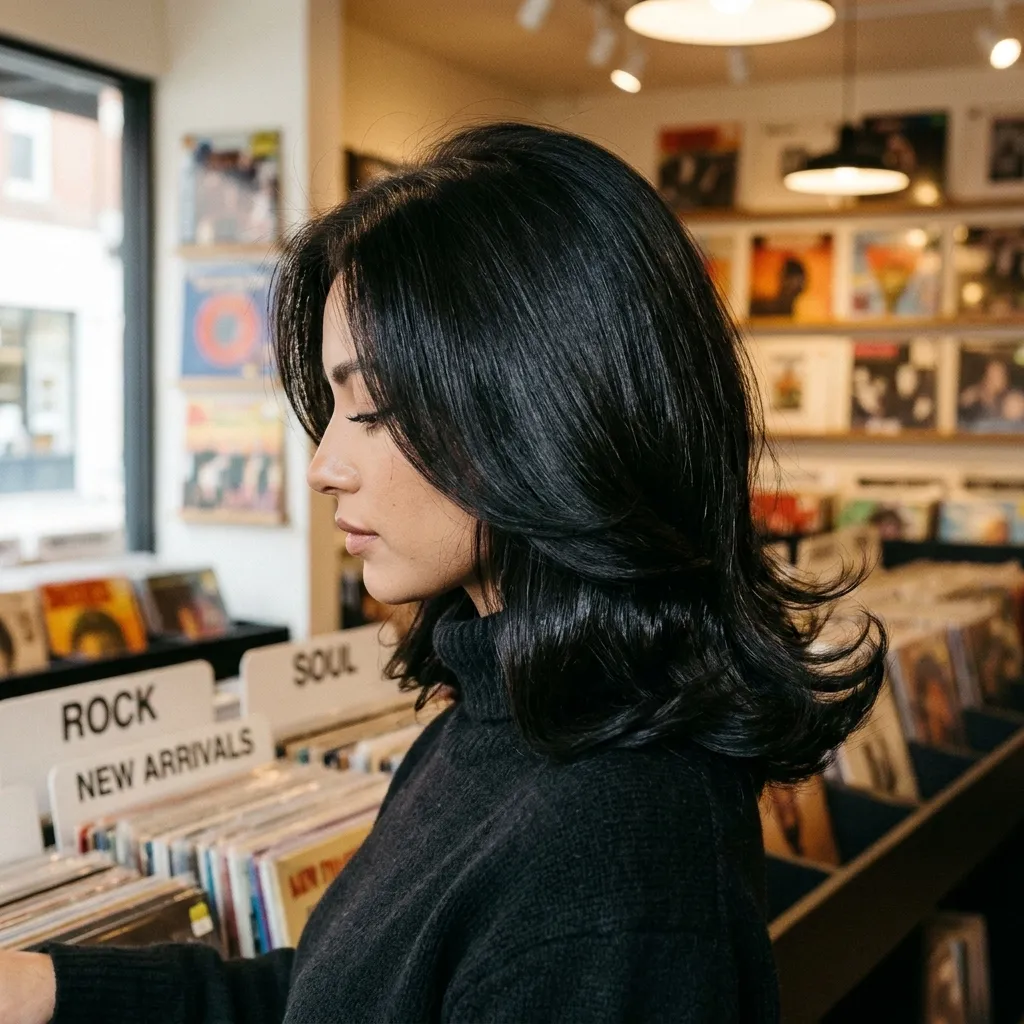
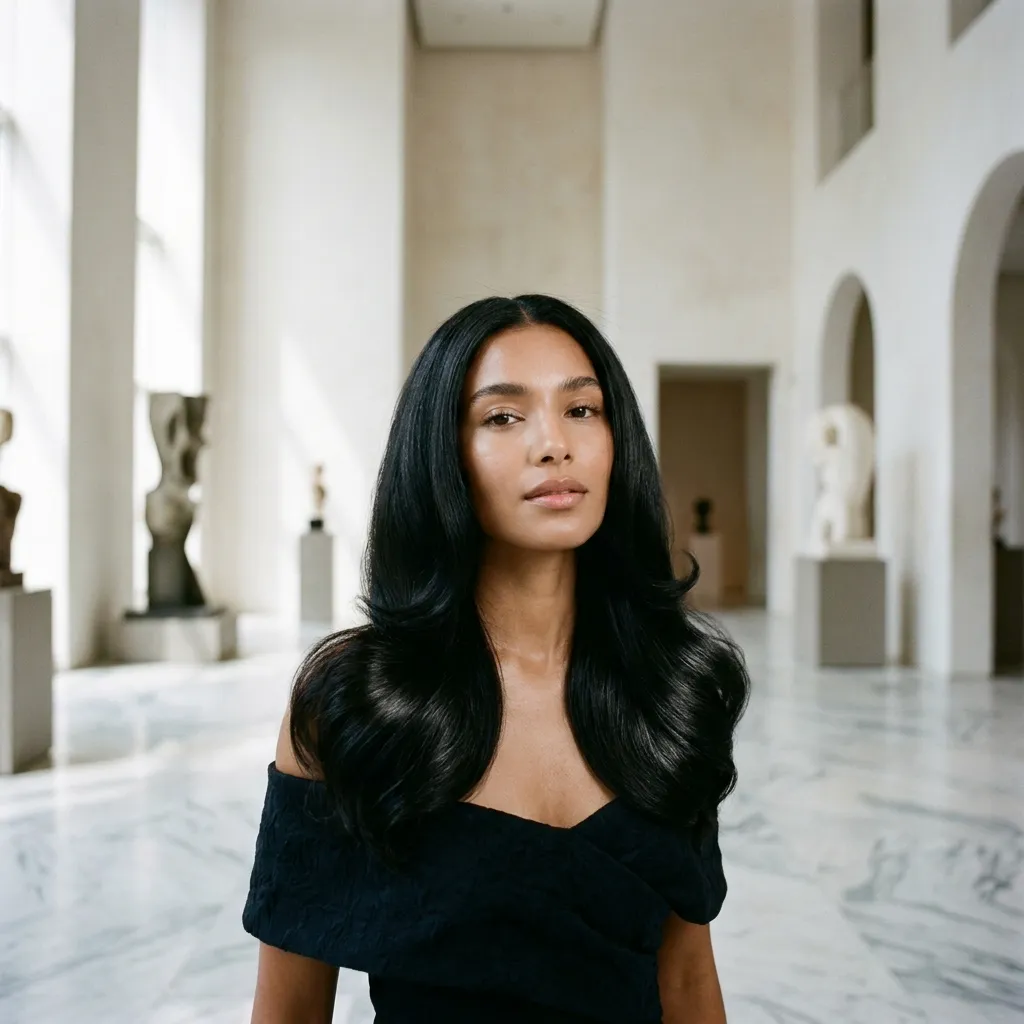
A glossy 90s blowout combines controlled roots with large, bouncy lengths. The hair should look smooth without becoming completely flat at the scalp. The contrast between sleek roots and fuller ends gives the style a refined finish. Shine is important because it emphasizes the rounded shape and makes the movement easier to see.
Begin by smoothing the roots with a blow dryer and brush while keeping some lift near the crown. The lengths can then be shaped with a large round brush. A small amount of shine serum should be applied only after styling, mainly through the mid lengths and ends. Too much product can make the hair lose the airy quality that makes a blowout attractive.
This look works well for formal events because it has a clean and polished appearance. It can also suit naturally straight hair that needs additional body. Keep the part simple and let the finish of the hair provide most of the visual impact.
10. 90s Blowout With Loose Waves
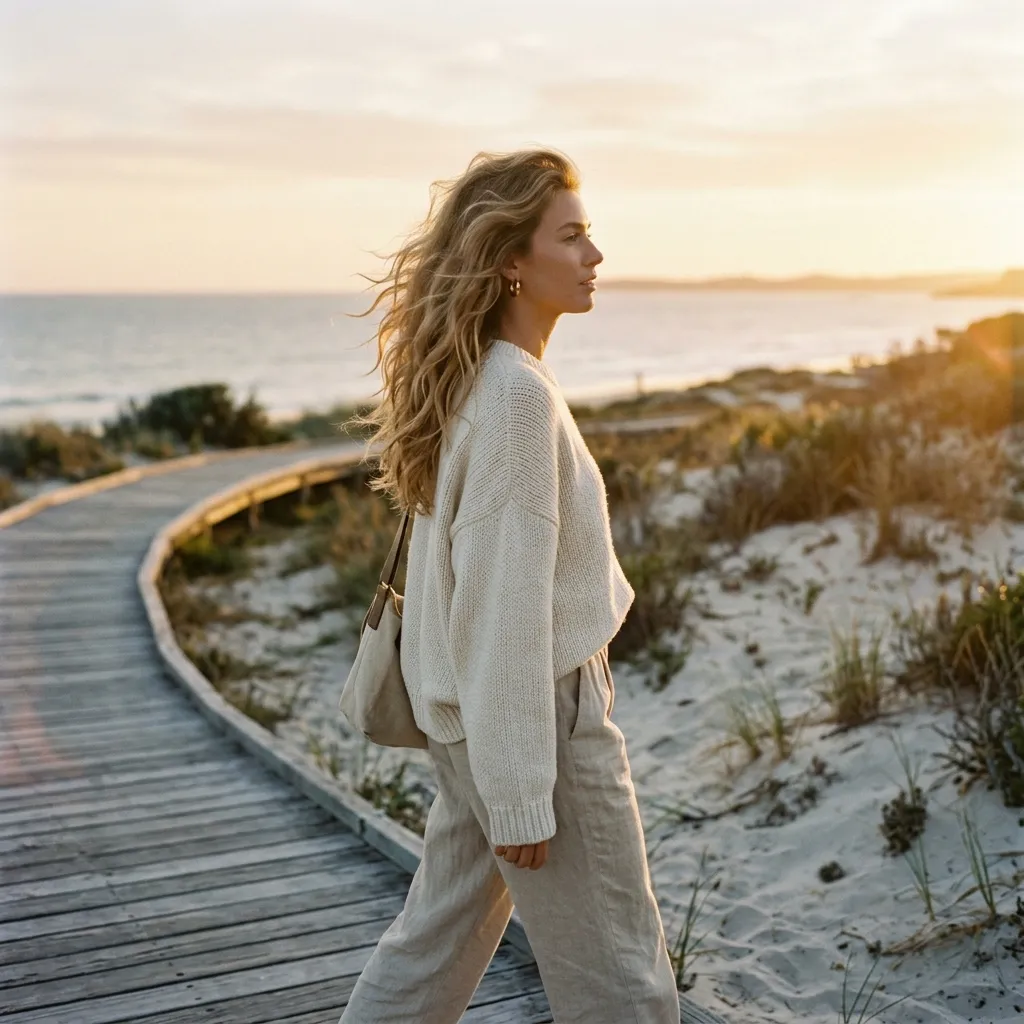
Loose waves give a 90s blowout a more relaxed finish while preserving its signature body. The waves should remain broad and soft rather than becoming defined curls. The roots need enough lift to support the shape, while the ends should flow naturally. This creates a hairstyle that feels glamorous without looking overly formal.
The easiest method is to blow-dry the hair first and then use large rollers or a large barrel tool on selected sections. Do not wrap every strand tightly. The goal is to introduce gentle bends that blend with the existing blowout. Once the hair cools, separate the waves with your fingers and let them fall into a soft shape.
This variation works especially well for thick or naturally wavy hair because the natural texture can provide additional body. It is also useful when you want a less polished interpretation of 90s hair. A few loose strands around the face can make the finished style look effortless.
11. 90s Blowout With Curtain Layers and Feathered Ends
Combining curtain layers with feathered ends creates a highly dimensional version of the 90s blowout. The shorter front pieces create shape around the face, while the feathered lengths add movement toward the shoulders. The layers should overlap smoothly so there are no harsh transitions. This combination is ideal when you want noticeable volume without sacrificing softness.
The front sections can be rolled backward with a large round brush to create the characteristic outward sweep. Move gradually into the longer layers and change the direction slightly so the ends do not all fall into one rigid line. Let each section cool before separating it. This helps the layers maintain their shape for longer.
The finished look has a distinctly retro foundation but can easily be updated with modern color and texture. Soft brunette, dimensional blonde, and warm copper shades all work well with this haircut. The style can be worn with a middle part for symmetry or shifted slightly to one side for additional lift.
12. Modern 90s Supermodel Blowout
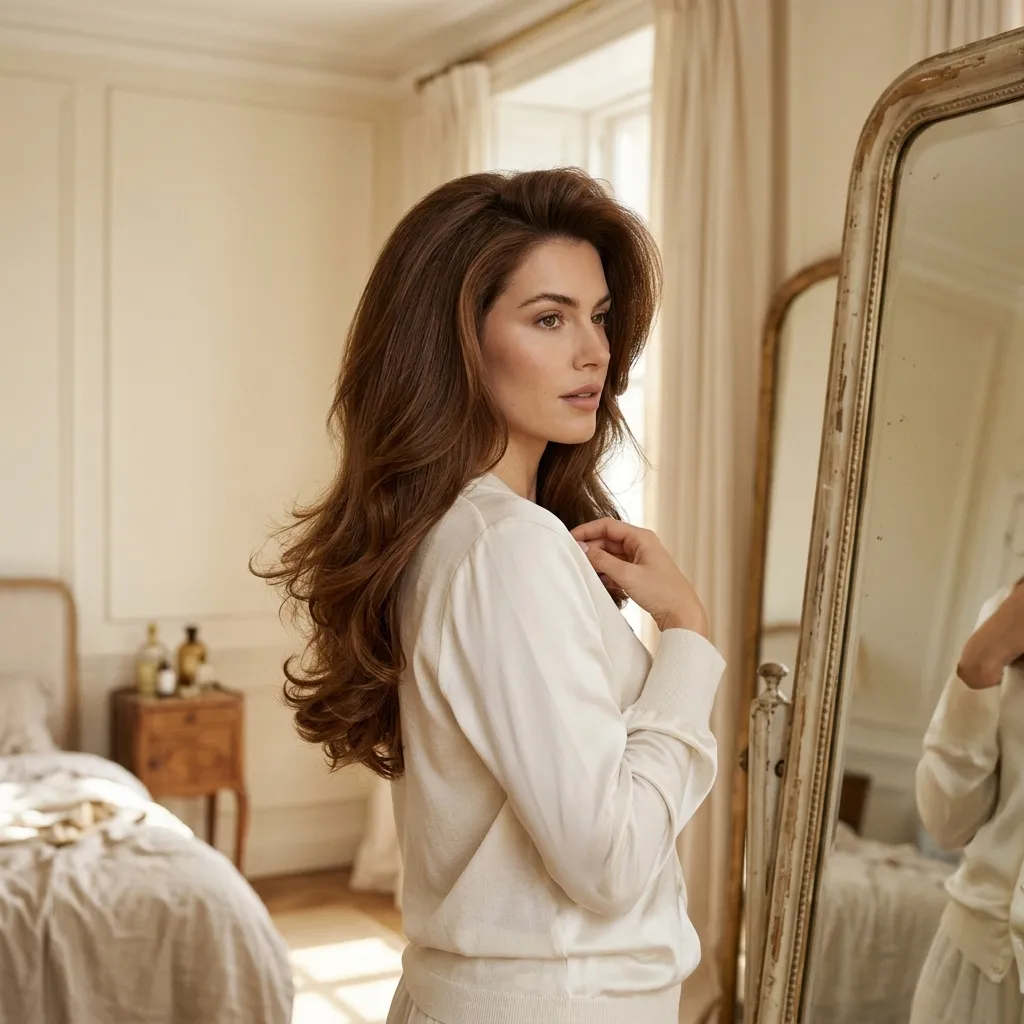
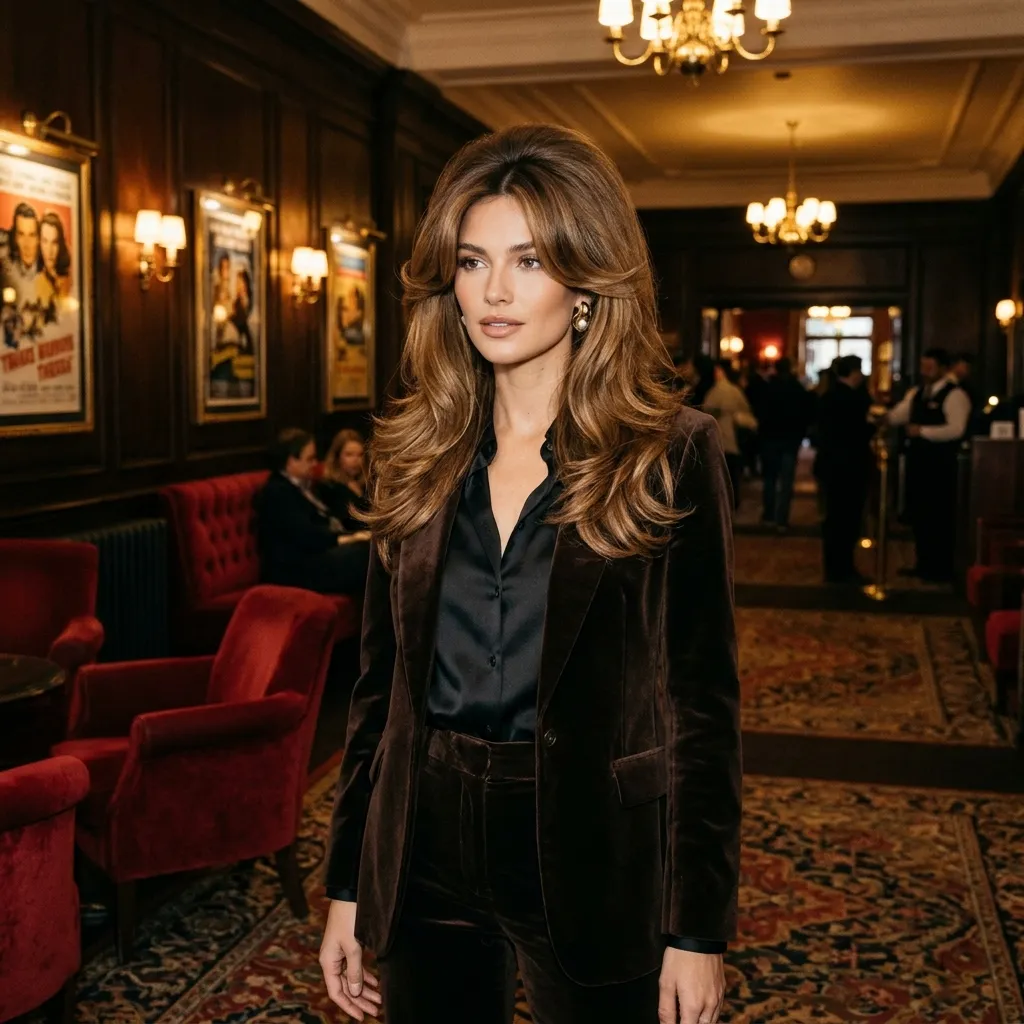
The modern 90s supermodel blowout takes the biggest elements of the decade and makes them softer and more wearable. It combines lifted roots, long flowing layers, curved ends, and a smooth glossy finish. The volume is noticeable but should still allow the hair to move naturally. The result feels glamorous without looking overly fixed in place.
A large round brush is essential for building the broad shape, while rollers can help hold the crown and longer layers as they cool. Instead of teasing the roots heavily, focus on proper sectioning and directional drying. This creates volume that looks more natural. Finish by loosening the hair with your fingers so the layers blend into one continuous shape.
This version works particularly well for special occasions, photographs, and polished evening outfits. It can be adapted to blonde, brunette, black, copper, or dimensional highlighted hair. If your haircut already has long layers and face framing pieces, only a few styling changes may be needed to achieve the effect.
What Makes a 90s Blowout Look Different From a Regular Blowout?
A 90s blowout usually has more visible body, rounded movement, and layered volume than a basic modern blow dry. The shape is created through the combination of root lift, large rounded bends, and curved ends. It does not rely on tight curls or highly defined waves.
The silhouette is another important difference. A standard blowout may focus mainly on smoothness and shine, while a 90s blowout places equal attention on fullness and movement. The hair should look substantial without appearing stiff.
Layered hair often makes the effect even stronger. Shorter pieces around the face can be directed outward, while longer sections maintain a smooth flowing shape. That combination creates the recognizable retro movement associated with 90s blowout hairstyles.
How to Get a 90s Blowout at Home
You can create a 90s blowout at home by building the hairstyle in sections and allowing each section to cool before releasing it. Start with damp hair and apply a lightweight volumizing product near the roots. Use a heat protectant through the lengths before using a blow dryer.
Divide the hair into manageable sections. Use a large round brush to lift each section at the roots, then slowly pull the brush through the length while keeping the hair wrapped around it. Roll the ends under or away from the face depending on the style you want. Large sections create broader volume, while smaller sections create more defined movement.
Once the whole head is dry, allow the hair to cool completely. This step helps the shape last longer. Remove any rollers if you used them and gently separate the hair with your fingers. Finish with a light flexible hairspray rather than a heavy product that could make the hair stiff.
Which Haircuts Work Best With 90s Blowout Hairstyles?
Layered haircuts work especially well because the different lengths create movement and lift. Long layers are useful for creating a flowing supermodel shape, while shorter face framing pieces add softness around the face. Curtain bangs can also blend naturally into a 90s blowout.
Medium length hair can create an equally attractive result. In this case, the volume is often concentrated around the crown and sides, while the ends are given a rounded finish. Shoulder length hair can look especially full when styled with a large round brush.
Even one length hair can be styled into a blowout, although the result will have less layered movement. The key is to create volume at the roots and shape the ends carefully. If you want a stronger 90s effect, adding subtle long layers before styling can make the finished shape more dynamic.
How Do You Keep a 90s Blowout Voluminous?
You can keep a 90s blowout fuller by using lightweight products and giving the hair enough time to cool in its styled position. Heavy oils and thick creams can pull the roots down. Apply richer products mainly to the ends if your hair needs extra smoothness.
Velcro rollers can also help preserve volume around the crown and front sections. Place them after blow drying while the hair is still warm, then leave them in until the sections have completely cooled. This gives the roots more support without requiring excessive teasing.
Sleeping on the hairstyle can reduce some of the volume, so loosely securing the hair can help. Avoid tying it tightly because that can create dents and flatten the shape. The following morning, gently lift the roots with your fingers and refresh the front sections with a quick blow dryer pass if needed.
Can You Create a 90s Blowout on Fine Hair?
Fine hair can achieve a 90s blowout, but the styling approach should focus on lightweight volume rather than heavy products. A volumizing mousse or root spray can provide support without coating the hair too heavily. Large rollers are also useful because they create shape without making fine hair look overly curled.
Avoid applying conditioner directly to the roots if your hair becomes flat easily. Concentrate it on the lower lengths and ends instead. When blow drying, lift the roots away from the scalp and allow each section to cool before moving on.
Fine hair may not hold an extremely large blowout all day, but a softer version can still look full and polished. Strategic layering can also help create more movement. The most important goal is to preserve lift without adding unnecessary weight.
Are 90s Blowout Hairstyles Good for Everyday Wear?
90s blowout hairstyles can work for everyday wear when the volume is kept moderate and the finish is relaxed. You do not need the biggest possible shape every time. A soft blowout with rounded ends can look polished with casual clothing as well as workwear.
For daily styling, focus on the front pieces and crown instead of spending a long time shaping every section. Medium length hair can often be refreshed quickly because there is less length to dry. A softer version also tends to hold its shape better throughout the day.
For special occasions, you can increase the volume and make the side part more dramatic. Adding large rollers or more pronounced face framing creates a stronger retro finish. This makes the same basic hairstyle flexible enough for both casual and formal settings.
Conclusion
90s blowout hairstyles are defined by volume, movement, rounded ends, and a polished finish that still feels touchable. The look can be dramatic with a deep side part and huge crown volume, or softer with feathered layers and loose waves. Curtain bangs and face framing layers are especially useful for giving the style a modern shape.
The right version depends on your haircut, hair density, and preferred level of volume. Long layered hair creates a flowing supermodel effect, while medium length hair can produce a compact and bouncy silhouette. Fine hair can also benefit from the technique when lightweight products and proper cooling are used.
Whether you want a glamorous evening hairstyle or a softer everyday blowout, the 90s shape offers plenty of room to personalize. Start with the amount of volume you actually enjoy wearing, then adjust the part, layers, and direction of the ends to make the look your own.
Frequently Asked Questions
What is a 90s blowout hairstyle?
A 90s blowout hairstyle is a voluminous blow dried style with lifted roots, smooth layers, rounded ends, and noticeable movement. It usually has a fuller silhouette than a simple straight blow dry.
How do you get the 90s blowout look?
You can get the look by applying heat protectant and volumizing product, then drying the hair with a large round brush. Lift the roots, curve the lengths, and allow each section to cool before brushing it out.
What haircut is best for a 90s blowout?
Long layered hair, face framing layers, curtain bangs, and medium length layered cuts are excellent choices. These shapes provide the movement needed for a bouncy blowout.
Can you do a 90s blowout with short hair?
Yes, you can create a 90s inspired blowout on shorter hair. Focus on root lift, rounded ends, and soft movement rather than trying to create extremely long flowing layers.
Is a 90s blowout curly?
A 90s blowout is usually not tightly curly. It uses broad bends, rounded ends, and soft waves to create volume and movement rather than defined curls.
What products help create a 90s blowout?
A heat protectant, lightweight volumizing mousse or root spray, and flexible finishing spray are useful choices. A small amount of shine serum can be added to the ends after styling.
Can fine hair have a big 90s blowout?
Yes, fine hair can have a voluminous 90s blowout when lightweight products, large rollers, and proper root lifting techniques are used. Avoid heavy products that can flatten the hair.
How long does a 90s blowout last?
A 90s blowout can last from one day to several days depending on hair type, humidity, styling technique, and how the hair is maintained overnight. Cooling the sections properly can improve longevity.